
How Solar Window Film Helps Stabilize Your Home's Temperature, and Why That Matters More Than You Think
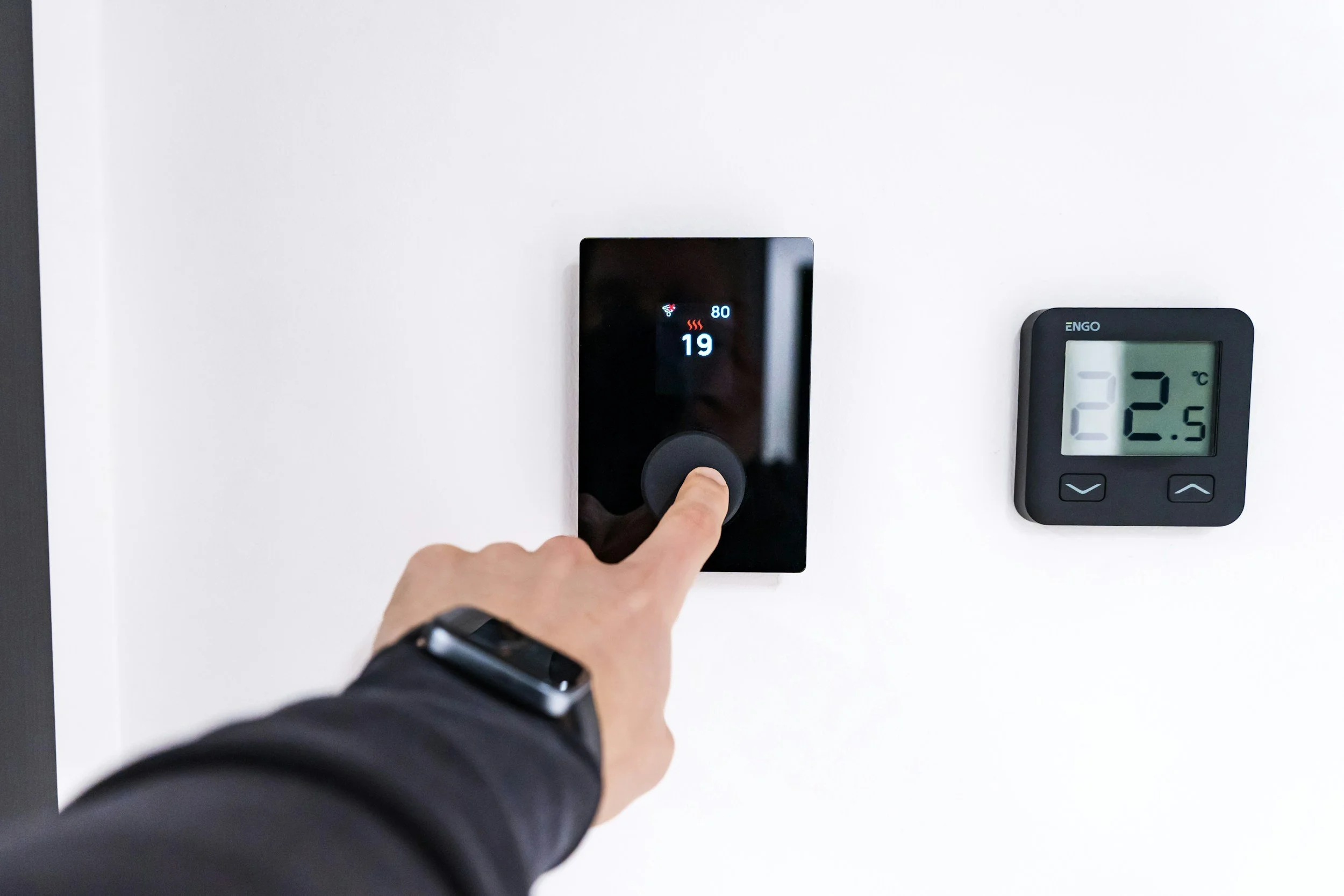
We tend to measure the success of our home's heating and cooling system by one simple question: is it comfortable in here? If the answer is yes, we assume everything is working efficiently and move on with our day. But comfort and efficiency are not always the same thing — and understanding the difference could save you a significant amount of money every single year.
The secret lies not just in how warm or cool your home gets, but in how stable your home's temperature is. And this is where solar window film plays a surprisingly powerful and scientifically interesting role.
Let's dig in.
Your Thermostat Is Smarter Than You Think — But It Has a Weakness
To understand why temperature stability matters so much, it helps to understand a little bit about how your heating and cooling system actually works. At the heart of it is a control system that engineers and HVAC professionals call a PID control loop — which stands for Proportional, Integral, and Derivative control.
Don't let the technical name intimidate you. The concept is actually quite elegant, and once you understand it, you'll never look at your thermostat the same way again.
A PID control loop is essentially a feedback system — a set of instructions that tells your furnace or air conditioner how to respond to the difference between where your home's temperature currently is, and where you want it to be. It works in three coordinated ways:
Proportional control responds to the size of the gap between your current temperature and your target temperature. The bigger the gap, the harder your system works to close it.
Integral control looks at how long that gap has persisted over time. If your home has been too cold or too warm for an extended period, the system ramps up its response accordingly.
Derivative control looks at the rate of change — how quickly is the temperature moving? Is it dropping fast or stabilizing? This helps the system anticipate what's coming and adjust smoothly rather than overreacting.
Together, these three components allow your HVAC system to hunt for the ideal temperature and try to maintain it as efficiently as possible. When everything is working well, your system reaches your target temperature and settles into a comfortable, stable rhythm — running just enough to maintain the sweet spot without constantly overcorrecting.
That's the goal, anyway.
The Problem: Temperature Swings Throw the Whole System Off
Here's where things get interesting — and where most homes quietly lose a lot of energy and money without their owners ever realizing it.
When your home is subject to large, rapid temperature swings — caused by intense sunlight pouring through windows, cold drafts pulling heat away from the glass, or the dramatic outdoor temperature changes that Alberta homeowners know all too well — your HVAC system is forced to constantly play catch-up. Instead of maintaining a stable temperature with gentle, efficient adjustments, it finds itself responding to wild swings that demand a much more aggressive response.
Think of it this way. Imagine you're trying to fill a bathtub to exactly the right level, but someone keeps pulling the plug and letting water rush out while someone else keeps adding cold water from a bucket. No matter how sophisticated your faucet control system is, you're going to spend a lot of time and effort just trying to get back to where you started — let alone holding steady at the right level.
That's exactly what happens to your furnace and air conditioner when your home's thermal envelope is compromised by uncontrolled heat gain in summer and uncontrolled heat loss in winter. The system is no longer operating in its efficient, steady-state sweet spot. Instead, it's lurching between extremes — running hard, shutting off, running hard again — in a cycle that wastes energy, accelerates wear and tear on expensive equipment, and still often fails to deliver consistent comfort.
In engineering terms, the system is experiencing what's called poor setpoint tracking — it's constantly chasing a moving target instead of holding a stable position. And the harder a PID system has to work to chase a moving target, the less efficient it becomes.
Solar Window Film: Reducing the Disturbance, Stabilizing the System
This is where solar window film enters the picture in a genuinely meaningful way — not just as a comfort upgrade, but as a tool that improves the fundamental operating efficiency of your entire HVAC system.
By applying solar window film to your home's windows, you are directly reducing the size and frequency of the thermal disturbances that force your HVAC system to overreact. Here's what that looks like in practice:
In the summer, without window film, the afternoon sun hammers through your west-facing windows and rapidly drives up the temperature in those rooms. Your thermostat detects a sudden spike in temperature — a large deviation from your setpoint — and signals your air conditioner to respond aggressively. The AC kicks into high gear, runs hard, cools the space back down, and shuts off. Then the sun shifts, or a cloud passes, and the temperature drops again. Then it climbs again. This constant cycling — often called short cycling — is one of the most inefficient and mechanically stressful things your air conditioner can do. It consumes more energy per degree of cooling than steady-state operation, and it puts enormous strain on the compressor and other components.
With solar window film in place, that afternoon heat surge is dramatically reduced before it ever enters your home. The temperature rise is slower, smaller, and more gradual — exactly the kind of gentle, manageable change that a well-tuned PID system handles with ease. Your air conditioner responds proportionally, runs at a steady pace, achieves the target temperature smoothly, and maintains it without the frantic cycling. The system is finally operating the way it was designed to.
In the winter, the same principle applies in reverse. Without window film, cold glass acts as a constant drain on your home's heat — pulling warmth out of the room and creating cold spots and drafts near windows that send your thermostat into overdrive. Add a burst of bright winter sunshine warming one side of the house while the other side loses heat to the cold, and your furnace is dealing with uneven, unpredictable temperature swings that are difficult to manage efficiently. Window film's insulating properties reduce this heat loss, evening out the thermal load and allowing your furnace to maintain your target temperature with less effort and fewer aggressive on/off cycles.
Why Steady-State Operation Is So Much More Efficient
It's worth pausing to really appreciate why stable, steady-state operation matters so much from an efficiency standpoint — because the numbers can be striking.
Every time your air conditioner or furnace starts up from a cold state, it consumes a disproportionately large amount of energy during the startup phase before settling into its most efficient operating range. This is similar to how a car uses far more fuel accelerating from a stop than it does cruising at highway speed. The more frequently your system has to start, stop, and restart to chase temperature swings, the more of your energy bill is consumed by these inefficient startup cycles rather than productive, steady-state operation.
A home with a well-stabilized thermal environment — one where temperatures drift slowly and predictably rather than spiking and plunging — allows the HVAC system to spend the vast majority of its operating time in that efficient cruise control zone. Fewer startups. Longer, smoother run cycles. Less wear on the compressor, the heat exchanger, the fan motors, and all the other components that degrade fastest under stop-start stress.
The practical implication is significant: reducing temperature swings doesn't just improve comfort — it extends the lifespan of your equipment and reduces both your energy bills and your long-term maintenance costs simultaneously.
The Whole House Benefit
One of the underappreciated advantages of solar window film is that it improves thermal stability across your entire home, not just in individual rooms. When every window in the house is filtering solar heat gain and reducing heat loss, the overall thermal load on your HVAC system becomes more balanced and predictable. There are fewer hot spots forcing one part of the system to overwork while another part idles. The temperature across different rooms becomes more consistent. And your thermostat — wherever it happens to be located — gets a more accurate and representative reading of your home's overall comfort level.
For homes with zoned heating and cooling systems, this whole-house stabilization effect is even more pronounced. Each zone benefits from reduced thermal disturbances, and the overall system can operate with far greater coordination and efficiency.
A Simple Upgrade With a Surprisingly Deep Impact
What makes solar window film so remarkable from an engineering standpoint is that it improves your home's efficiency not by adding more power or complexity to your HVAC system, but by reducing the demands placed on it in the first place. It's a passive solution — no moving parts, no maintenance, no ongoing costs — that quietly works every single day to keep your home's thermal environment stable, predictable, and easy to manage.
In a well-designed system, the best interventions are often the ones that reduce the problem rather than just respond to it more aggressively. Solar window film does exactly that. It shrinks the temperature swings that drive inefficiency, gives your PID-controlled HVAC system the stable environment it needs to perform at its best, and delivers the kind of quiet, consistent comfort that most homeowners didn't even know they were missing.
Is Your Home's Temperature Stable Enough?
If your home experiences any of the following, solar window film could make a meaningful difference to both your comfort and your energy bills:
Rooms that heat up rapidly in the afternoon sun and take a long time to cool back down
An air conditioner or furnace that cycles on and off frequently rather than running steadily
Noticeable cold spots or drafts near windows during winter months
Uneven temperatures from room to room throughout the day
Energy bills that seem higher than they should be given your home's size and insulation
The solution doesn't have to be complicated. Sometimes the smartest upgrade is the simplest one.
Let's Talk About Your Home
At Secure Tint, we're passionate about helping Alberta homeowners get the most out of their homes — in every season. Our team can assess your home's specific needs and recommend the right solar film solution to maximize your comfort, stabilize your temperature, and help your heating and cooling system work smarter, not harder.
Contact us today for a free consultation — and discover what a difference a stable home can make.
Secure Tint — Quality, Integrity, and Premium Customer Service, Every Time.